
Baylon Fonseca praises Lectrosonics ‘powerhouse’
Published: ASIA
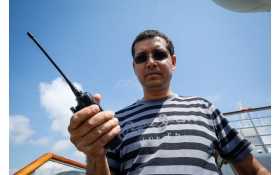
INDIA: Award winning sound designer Baylon Fonseca has declared the Lectrosonics Digital Hybrid wireless system used for Bollywood comedy-drama Dil Dhadakne Do (Let the Heart Beat) as one of ‘the powerhouses of my arsenal’. Mr Fonseca provided location recording, sound design and postproduction services on the film.
Released in June 2015 and starring Anil Kapoor, Shefali Shah, Priyanka Chopra, Ranveer Singh and Anushka Sharma, Dil Dhadakne Do tells the story of a Punjabi family celebrating a 30th wedding anniversary with friends on a Mediterranean cruise. Mr Fonseca added to his Lectrosonics inventory for the film to better cope with the large ensemble cast and a dynamic RF environment as the ship visited ports in Spain, Tunisia, Italy and France. He explained that while he would normally use a Sixpack, providing RF and power distribution for up to six receivers, the shoot required more equipment.
‘I knew there were a lot of actors and I would require more transmitters,’ he said. ‘I’ve been using the UCR411a with the ALP antenna and I get a great range out of it. I had a lengthy discussion with Karl Winkler, at Lectrosonics, just to make sure I was on the right track, and then I bought four more 411s. I had 10 of them in total, plus two wireless boom transmitters.’
In total the cast numbered 23 with seven principals and typically another three or four actors around them. ‘When you have so many people in a scene you think you will have three or four people talking and you end up with seven or eight,’ he observed.
‘I was prepped for 10 wireless transmitters at any point in time, along with my booms, so 12 tracks of recording. I use the Deva 5.8 hard disk recorder, which is eight tracks, and I had a Sound Devices 788 recording in parallel, timecode-locked. I used a Sonosox SX ST/8D, a digital mixer, which I love. I feel that the Lectrosonics equipment, along with the mixer, are the powerhouses of my arsenal. I can’t work without them, and I wouldn’t trade either of them for anything in the world.’
Fonseca miked the actors with Sanken COS-11 lavaliers. ‘When I had a scene that required special miking, because of the kind of clothes that my actors might be wearing, I would go to the B3 Countryman. I would also use Countryman B6s and EMWs, depending on the scene.’
Having developed close relationships with many of the actors over the years, Fonseca normally works with them personally to fit them with their microphones. That relationship also means that they trust him to record wild tracks away from the set moments after the performance. ‘My actors were happy to give me a delivery of the line as safety. It’s the same thing as ADR, so I can punch in a line like it was said on set; it will sound just as real.’ Sometimes, he says, he doesn’t even have to ask: ‘They sometimes come to me and ask me to pick up a line, in case I want to use it later.’
The film was shot in the Mediterranean during six weeks on a working cruise liner with 2,500 vacationers and 700 ship crew. It later relocated to Turkey for four weeks followed by a four-week shoot in Mumbai.
‘As I design my own films, one of my briefs to the team on this project was that the dialogue is the heart of the sound design of this film,’ explained the sound designer. ‘It’s not effects – there are no crazy car chases, gunfights, nothing. Capturing the dialogue took precedence over everything.’