
Pathway to the Powerhouse
Published: ASIA
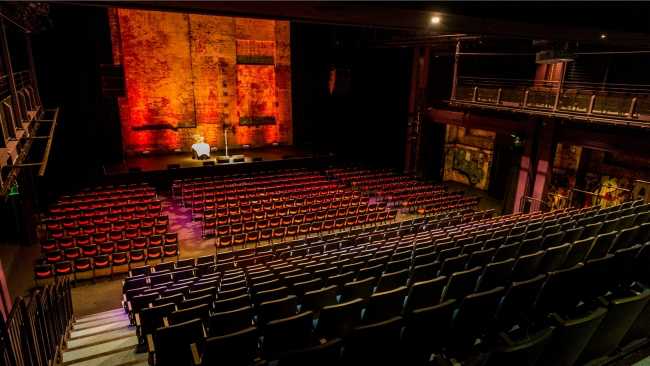
AUSTRALIA: Brisbane Powerhouse has recently upgraded the data distribution for its lighting system by installing a Pathway Connectivity solution comprising a Cat-6 network with Pathport nodes and Pathport Manager software. Audio, lighting and staging distributor, Jands, supplied the equipment.
The power station turned contemporary performing arts, dining and conference venue had relied on a system of two DMX cabled universes. This required the installation of extra cables and additional infrastructure should the venue need to expand the system for a specific event. A total of nine Pathport C-series nodes have now been installed throughout the Brisbane Powerhouse, converting the lighting data distributed across the Cat-6 network to DMX.
‘We looked at a few options but the Pathport hardware allowed us to easily output any combination of two universes at any node,’ explained Brisbane Powerhouse’s head of lighting, Simon Cook. ‘For example, Universe 1 and 2 on node A and Universe 8 and 15 on node B and so on. You can use Pathport manager to configure everything to suit the particulars of your show.’
The new setup is reportedly providing the venue with the flexibility it needs to make extending the system much simpler, as additional nodes can be added to the Cat-6 network that Pathport operates on. ‘We also have a Pathport Quattro which we can use anywhere we require additional universes,’ added Mr Cook. ‘It’s great if you need to build a pixel mapped LED wall on stage or something similar.
‘We can go from two universe shows to 16 universe shows with multiple protocols very easily,’ he continued. ‘Any node can be an input or an output. Before we installed Pathport nodes, if you wanted to run the lighting console side of stage you had to run DMX cables back to the control booth. Now we can just plug a network cable in if we require more than two universes or make a node an input rather than an output if that suits, using the system management.’
The Australian Performing Arts Market has since been held at the venue, with many theatre companies bringing their own lighting consoles. This would have previously meant DMX input merging or cabling swaps between performances, but as the head of lighting noted, this was no longer an issue. ‘We could have multiple inputs into the system at the same time and with a little pre-planning have no worries about playback clashing or anything like that. You could leave your house console plugged in, they could patch their consoles in and playback their shows really easily.
‘When a touring console comes in we change the IP address on the console and everything talks,’ Mr Cook concluded. ‘In addition, when the show bumps out we can reload our standard input/output configuration from the control booth with no need to visit each node and reconfigure individually.’