
The MLA family goes to the theatre
Published: ASIA
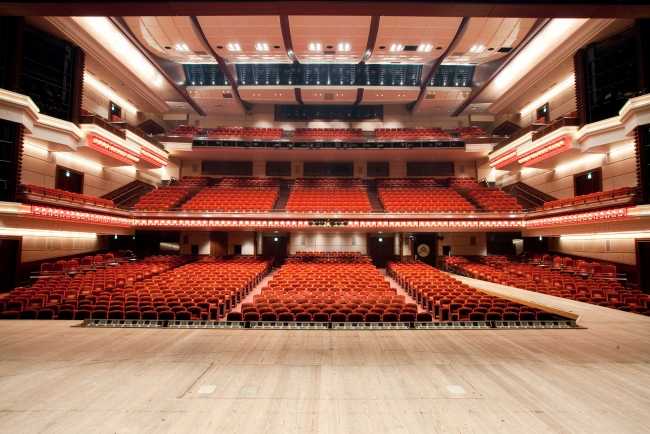
JAPAN: The Hakataza Theatre recently underwent a renovation, it being 16 years since the Fukuoka-based venue first opened its doors in 1999. A system comprising Martin Audio’s MLA family was selected as the theatre’s new sound system over a range of alternatives, all of which were trialled and tested during a five-year period. Music Reserve Inc carried out the installation.
Certain acoustic requirements were to be adhered to in order to accommodate the variety of events that the Hazataza Theatre plays host to, including Kabuki, musicals and theatrical performances. Martin Audio MLA Compact loudspeakers were flown in an L/R formation of 11 per side with two per side DSX subwoofers for reinforcement. Meanwhile, eight MLA Mini elements have been installed as a centre cluster and 73 DD6 loudspeakers cover the remainder of the theatre.
The engineers from Music Reserve designed the setup so that the MLA Compacts direct sound evenly to the three seating tiers in the theatre, with the device’s preset function reportedly assisting in adjusting the optimisations to cater to different types of performance. ‘In the Hakataza Theatre we have to cater for many kinds of programme and in the past we have experienced shortcomings in the sound with some productions and presentations,’ noted sound engineer Noguchi Takehiko from Music Reserve. ‘The MLA family has overcome that and given me an innovative way to deliver consistent sound throughout the auditorium.
‘The distributed DD6s then help not only to cover the audience area but also maintain the character of sound,’ he continued. ‘The DD6’s Differential Dispersion horn delivers high clarity from the front seats to the back, and therefore there is no compromise in this system.’
‘Even when a voice is whispering through micro-microphones, the MLA system not only delivers consistent frequency response but also has a capability to control the non-audience area,’ added Yoshihiro Tsubone, also a sound engineer from Music Reserve. ‘This is helpful for the engineer operating microphones to ensure dialogue is delivered audibly to the audience during the show. It means we now have the ability to control the sound pressure level for the whole audience area, for every type of programme. I have never experienced anything like this degree of functionality before.’