
Panoramic DLP projector reduces need for edge-blending
Published: PRODUCTS
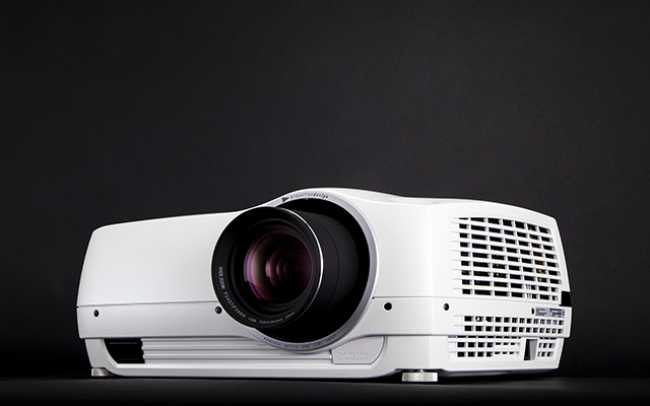
Declaring it a ‘world’s first’, projectiondesign has introduced a ‘panoramic’ DLP projector that reduces the need for edge-blending. Named the F35 Panorama, the projector boasts an image aspect ratio of 21:9 or 2.37:1. It leads a broad range of product announcements from the manufacturer, including 3-chip 3D projector and new X-PORT extension modules.
The F35 Panorama is capable of creating an image as wide as 4m without edge-blending, or alternatively projecting side-by-side images from two separate high-resolution sources. It is based on the manufacturer’s already popular F35 single-chip DLP platform and offers a resolution of 2.7 megapixels plus brightness of up to 7,000 ANSI lumens.
Meanwhile the 2D and 3D capable F85 3-chip DLP projector has been launched as the brightest model in the company’s portfolio, offering 11,000 lumens, and a contrast ratio of 14,000:1.
The 24.1kg model is available in WUXGA or 1080p resolution versions as well as a special version that can optically switch between REC709 and DCI P7 colour spaces. Crucially, while it supports 2D imaging, the projector can be used in active or passive 3D stereoscopic mode removing the requirement for multiple projectors in stereoscopic set up. It can display sequential 3D at up to 120Hz, and frame rate convert any input signal to 120Hz in conjunction with the X-PORT DCC120 module (see below).
Other features include the manufacturer’s Advanced Colour Optical Processing (ACOP) system, which combines both fixed and motorised optical filters for improved optical calibration, plus DuArch dual illumination architecture for high performance and extended lamp life.
New X-PORT plug-and-play extension modules are also now available with the manufacturer promising simple projector upgrades and configurations. The modular based front and back-end connectivity extensions have been designed for use with the F35, FL35 and F85. Two modules are available – the DCC120 Dual Channel Combiner and a 3G-SDI interface.
The DCC120 works as an image processor and frame rate converter, transforming discrete passive 3D stereo to active, as well as frame converting any input signal or combination of signals to sequential 120Hz. The 3G-SDI interface is compatible with both high-bandwidth 3G SDI and standard SDI for cable lengths up to 300m. The 3G-SDI can also be combined with the DCC120 to enable active stereo 3G-SDI. Future connectivity will add HDMI 1.4a.
Finally, the ProNet.precision auto-alignment software tool has debuted, offering extended functionality for camera calibration or alignment for multiple channels of projection.
The software – part of the ProNet software ecosystem – is intended to ‘instantly calibrate and align projectors according to surrounding architecture’ using a ‘sophisticated computing processing and digital camera capture’ system. Browser-based remote control is also offered.
Shipping: Now