
Broadcast standards: What’s the norm?
Published: WORSHIP
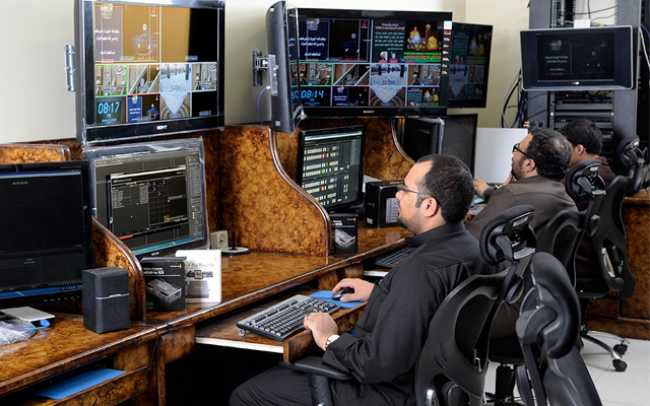
Technical broadcast standards must be adhered to when sharing services with broadcasters. Alice Gustafson talks to industry experts to find out more
The phrase ‘broadcast quality’ is a common buzzword in the broadcast and A/V markets, and it goes without saying that houses of worship strive to achieve just this when sharing their services with broadcasters. But what exactly are these standards? And how are they achieved?
Worship AVL Asia went directly to the manufacturers of products often used for worship broadcasts to explore the relationship that exists between the companies that make these products and the HOWs that use them.
When thinking about the technical standards that houses of worship follow to share their services with broadcasters, one immediately thinks of 1080i full HD for video. But with many looking towards 2K and 4K resolution, some HOWs may be wondering how manufacturers and broadcasters can stay in synch in future.
Stuart Ashton, director EMEA for Blackmagic Design, shares his thoughts on the future of worship broadcast standards: ‘When you come into the worship market, no one really says: “this has to be worship quality” or “this has to be A/V quality”. I think that the whole aspiration is to try and follow what the broadcasters are doing. Today we are seeing a large transition where to some extent broadcast has not got the budget to continue to progress. It also has the restrictions and limitations of what they can and can’t transmit, whereas when you look at worship, as long as they have the financial backing and the creativity to achieve what it is they want to achieve, the limitations are endless. The worship market can go as far forward with that as it wants to.’
The best way for manufacturers to ensure compatibility with broadcasters is to utilise the same formats and resolutions as those that are being used professionally. ‘For HD resolution, 1080i at a frame rate of 25 [for PAL-based countries] or 29.97 [for NTSC-based countries] is the most universal as it can be down-converted to 720p or even PAL/NTSC quite easily,’ explains Tony Cacciarelli, product marketing manager for AJA Video Systems.
Broadcast standards define very specifically what resolution and frame rate is to be used and the format that should be used for displaying the image on a monitor. In addition, broadcast standards also determine acceptable signal levels for video and audio.
‘These signals must be within an acceptable range in order to be properly broadcast, so it is imperative that HOWs understand and follow these standards in order to be as compatible with broadcast as possible,’ he asserts.
‘When you talk about broadcast quality, you’re working within a certain level of compliance, and that basically means that you’re working with high quality video,’ adds Mr Ashton. ‘HD is still the most predominant form of transmission. People are working within 2K and 4K specs, but that is still beyond many people because it’s still very difficult for people to transmit that. So when you look at the specifications, I think that people are working within a traditional HD environment, which is 1920 x 1080, and for 90 per cent of the marketplace, that is more than adequate.’
Much as event companies look to out-do one another with the quality of what they can achieve, HOWs continue to be loyal to technology in order to push the boundaries of their broadcast services. This fact has not gone unnoticed by technology manufacturers, who have started to tailor products to apply to a range of applications – worship included.
‘As a business we try and make our products cater for as many areas as possible and build them at a price that is affordable,’ says Mr Ashton. ‘What we’ve seen is a large demand from many HOWs in different parts of the world that are really getting involved with what we do. It’s all on the increase; there are budgets to be spent, and there’s definitely a desire to achieve high quality work.’
Whether it's a small or a large HOW, all follow a similar formula in order to achieve the best results in terms of broadcast. This often includes the use of multiple cameras, live switching in front of an audience, and being able to archive recorded content for the web or for transmission.
‘When you start looking at the larger HOWs, where they are reaching a larger mass of people, they are basically just growing upon the basic set-up: so more cameras, high quality switchers, and more creative input into the work that they do,’ Mr Ashton explains. ‘I think the limitations are endless, it just comes down to how many people they can devote to that job and how much money they are willing to spend.’
Adhering to broadcast standards
‘Broadcast standards are clearly published in technical documents by organisations such as SMPTE,’ offers Mr Cacciarelli. ‘When evaluating equipment for purchase, HOWs should look for technical product information that calls out specific SMPTE specification numbers. If equipment complies with these specifications then it has been tested and certified to meet the required standards.’
‘Blackmagic is very aware of these standards, and every product that we develop and make comes from a need from the research that we do with our customers,’ adds Mr Ashton. ‘We take away all of the information that we get and we put those to our product teams and they build products for those needs. That is the hard bit. Trying to develop it within a certain specification is relatively easy because we’ve been doing that for 10 years. A manufacturer must always keep the customer at the forefront of every decision they make, because there’s no point creating things just for the sake of creating them – you have to do things that people ultimately want.’
The strict broadcast guidelines are implemented to ensure that HOWs don’t drop below or produce something that is out of the necessary spectrum. But for occasions when broadcast standards can’t be met, manufacturers have devised products that work around this, so that even non-standard content can be used. These can take the form of frame synchronisers or converters, which are used by many broadcasters to ensure proper formats and levels are maintained on incoming video signals.
‘In cases where large problems with the content exist, it may take a lot of additional processing to bring that content into a useable format, if at all,’ explains Mr Cacciarelli. ‘But in order to be cost effective, it's best to avoid falling into this category.’ Mr Ashton concurs: ‘Anybody who is really trying to achieve the best quality will always try and achieve the standards that are set by broadcast.’
Keeping costs down is important in any industry, and HOWs and manufacturers of equipment alike must work to strike a balance between high quality, broadcast compliant products and cost effectiveness. ‘In order to meet these standards in a cost effective way, it's best to work in broadcast quality from start to finish,’ states Mr Cacciarelli. ‘This minimises the chances of creating media that will require extensive conversion. Using acquisition products such as file-based recorders can ensure HOWs are capturing proper video and audio during the services and makes editing content quick and easy by creating media files that are in a native format for editing software. Non-standard signals should be converted as early in the process as possible to the same standard format as any live recordings to ensure compatibility and minimise any loss of quality.
‘The availability and cost of broadcast-quality equipment has reached a point where it is not reserved just for high-budget broadcast facilities,’ he points out. ‘With a minimal investment, houses of worship can record, edit and distribute broadcast quality video and audio that will integrate easily with traditional broadcast facilities.’
‘My first suggestion for any HOW looking to gain that level of quality is, first and foremost, do your research on the businesses that you’re purchasing from and ensure that they’re meeting those requirements,’ Mr Ashton advises.
Additional factors HOWs must keep in mind are the different broadcast standards required for online and TV, as online broadcasting has different requirements from over-the-air broadcasting. The requirements of frame rates and resolutions are much less precise in the online world and content is typically highly compressed to allow delivery over Internet connections.
‘The recommended method for maximising compatibility is to work in broadcast quality and then create online deliverables from the broadcast media,’ explains Mr Cacciarelli. ‘This will ensure anything you create can be distributed to either platform, despite the differences in requirements.’
Mr Ashton believes that there has been a big increase in online content, and that this is typically being distributed and played out in a lower resolution than broadcast. ‘HOWs should always keep in mind where that destination is going to be. There is no point shooting something in 4K or 2½K if it’s then going to end up on the web as a standard definition video or a high definition video, unless there’s a particular reason for doing that. So HOWs have always got to try and look at the whole process and say: “Where is my destination? What am I trying to achieve? What do I need to do?” Because if you set out with the intention to always shoot at the highest possible quality when it’s not required, then one thing that you’re going to find is that the workflow and the process is going to be slowed down.’
In today’s markets, deadlines are tight and budgets must be kept to. It only makes sense that manufacturers and HOWs work together to produce technology and content that adheres to technical broadcast standards in a way that is efficient, easy to use and of the best possible standard.