
Worship on tour
Published: WORSHIP
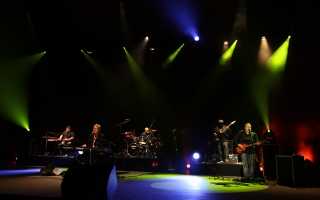
For touring engineers, having the right equipment is a vital part of their job. Having that familiarity at the fingertips and the confidence in the technology at their disposal can make the difference between a good performance and a great one.
This philosophy is no different in the worship environment, particularly if the tour covers foreign countries. ‘When we tour internationally, in many ways it is much more difficult because it’s hard to get a good handle on logistics long distance,’ explains Chuck Harris, sound engineer for the recent Don Moen tour that took in countries including the UAE and India. ‘On a domestic tour, we may be on busses with a truck that brings the production gear. This way, we have consistency and with your own crew, you get into a rhythm of how to load in, set up and soundcheck. On international tours it means fly dates and it’s not possible to fly all of our own gear.’
The way that Mr Harris chooses to tackle this is with technical riders sent out in advance to the venues as well as discussions over the phone and via email to solve any problems ahead of the show. ‘No matter how hard we work it in advance, there are always challenges on the ground. It’s usually around the issue of communication,’ explains Mr Harris. ‘Sometimes we find that the person we’ve been talking with isn’t actually the person who is directly in charge of the production. When we arrive we find that the people on the ground haven’t actually seen the rider. We also sometimes have language issues. But all of that said, we always figure out a way to make it work. Our first concern is for relationships. Relationships with the promoter, the production crew, the venue, and most importantly the audience.’
Fortunately these issues did not present themselves for the ministry’s recent tour, and Mr Harris is quick to praise the production companies he worked with. ‘In Dubai we worked with Artes Audio Visual. In Bangalore it was Total Productions, Prithvi Sounds provided production for both Chennai and Coimbatore. These guys were all top notch and did a great job of providing everything we needed.’
The process of engineering a touring worship production can be filled with challenges, particularly when it comes to the venues that are being played. ‘In recent years, production quality has gone way up in many churches, especially the larger ones and so we don’t always face too many challenges, but there are always exceptions,’ says Mr Harris. ‘The most common issue we face in churches is the fact that they are used to doing things a certain way, and they are in their own venue where they do their services formatted pretty much the same from week to week. So when we come in, we really disrupt their set up, and often they don’t understand why we don’t want the drum set way back in the corner, why we would want our inputs laid out any differently , or a big one; why we would want to touch their house EQ or processor.
‘That same issue of communication also comes up a lot,’ he continues. ‘Many times we’re advancing the concert with the minister of music, or a pastor and we make the mistake of assuming that they are passing all of our information along to their media team. So often we will arrive at a church and nothing has been set up and when you start saying things like “it’s on the rider” they will say, “we never got the rider”,’ notes Mr Harris. ‘In a nutshell, I would say that many churches don’t understand production at our level. I always try to make it a positive, learning experience for everyone and we usually walk away friends.’
The importance of the tech rider is highlighted by how little equipment touring productions will bring with them. ‘We never travel with PA or lighting,’ emphasises Mr Harris. ‘Our technical rider spells out our requirements for those pretty thoroughly. Obviously we can’t expect every production company to have every piece of equipment that we specify. For example, I list about four mixing consoles as possibilities for FOH, but I state clearly that if they are unable to get one of those, then feel free to let me know what their options are and we can negotiate a solution,’ he explains. ‘We also have most of our backline provided locally as well; drum kit, keyboards, guitar amp, bass amp, music stands, guitar stands, stools, and so on. The only things that we bring with us are Don’s violin, guitars, pedal boards and the myMix monitoring system.’
This is one of the key pieces of equipment for Mr Harris, and has made his job in each venue quicker and easier. ‘The main benefit to us is that I can get the band up and running in their headphones very quickly, at which point they become self-sustaining. Then I can get out to FOH and start dialling in that mix,’ he explains.
‘What we’ve found is that this makes it simple because most of the band is up and running with myMix totally independently of the PA, and so they really are self sufficient. It also helps with opening acts,’ Mr Harris continues. ‘Since we leave most of the monitor desk untouched, it frees it up for them, and conversely, they don't need to touch any part of our monitoring.’
Away from the recent addition of the myMix units, the rest of the list of desired equipment has been built up over a number of years. ‘I have developed Don’s technical rider over the years and it is really just the result of experience. Like I said before, we list our preferences and if something specific is not available, we always figure out an alternative that we can agree on with the production provider. For PA, I know what I like to use, and again I give options. For example for the FOH mixer I list the Yamaha PM5D, or an Avid Venue, a Midas XL8, or Allen & Heath iLive, which are all digital mixers. Then I list a couple of analogue desks as well,’ explains Mr Harris.
‘As far as the backline gear goes, I have interviewed all of the guys in the band and asked them to provide their preferences for their gear. Don is very particular about his piano sound and we usually try really hard to get a Yamaha CP300 stage piano there for him.’
Compromise is always the key word for touring engineers. However, if a church is able to meet the needs on a technical rider it will make the production much easier to handle. While these events do not happen every week, it is important that when they do visit a venue, the HOW’s media team knows what is on the rider. Good coordination with this aspect will make productions more likely to return. ‘There are churches where their technical director is brilliant and the team is top notch. I usually will try to talk Don into doing the rest of our concerts there, forever.’
www.donmoen.com
Don Moen’s Mix
The worship leader and musician has been using myMix for some time now and explains to Worship AVL Asia the advantages he has found to the personal monitoring system
What are the differences between the way you use myMix on tour and in rehearsals?
We’ve found that myMix has really helped our rehearsals because they’re so easy to set up and just get going. Sometimes we will rent a space to rehearse in, but more often we just set up in a room over my garage. Since the myMix units have microphone preamps built into them we really don’t need have any external mixer at all for rehearsing. For the drums, we just put a mic on the kick drum and an overhead and plug them both into one myMix mixer. The rest we just plug straight in as well. In just a few minutes we are up and running for rehearsal. It’s really great because the volume is totally under control. We can each hear exactly what we need to hear and no one gets fatigued over a long period of time.
Many myMix users have found themselves surprised by the versatility of the system, discovering new unexpected functions. Is this true of your experience? If so, what have you discovered?
Well, we researched them pretty well before we bought them so we had a good idea in our heads what they could do. But then when you start using them, it’s the experience that sort of brings it all into perspective. Having some EQ capabilities on each channel is a great feature, and having built in effects really is nice for me to feel comfortable with my vocals.
How has using myMix changed the way that you perform live?
It’s all about the sound. For me, when it sounds good in my ears, it’s more inspiring and helps me perform with confidence. The whole band loves they way the system sounds and we play tighter as a result. Long gone are the days of not being able to hear myself over the drums or the electric guitars. The stage volume is more controlled and I know that it makes for a cleaner sound out in the audience.